What is the maximum number of stops a glass home elevator can have?
As a provider of glass home elevators, I often encounter inquiries from customers regarding the maximum number of stops a glass home elevator can accommodate. This question is crucial as it directly impacts the functionality and suitability of the elevator for different home structures. In this blog, I will delve into the factors that influence the maximum number of stops and provide insights based on our experience in the industry.
Factors Affecting the Maximum Number of Stops
Structural Considerations
The structure of the building plays a significant role in determining the maximum number of stops. In multi - story homes, the height between floors, known as the floor - to - floor height, varies. Standard floor - to - floor heights typically range from 8 to 12 feet. A lower floor - to - floor height may allow for more stops within a given overall building height. For example, in a building with an 8 - foot floor - to - floor height, more floors can be served compared to a building with a 12 - foot floor height within the same total vertical space.
The strength of the building's structure is also vital. Glass home elevators need to be securely installed, and the building must be able to support the weight of the elevator car, passengers, and the associated machinery. If the structure is not strong enough, additional reinforcement may be required, which can be costly and time - consuming. In some older buildings, the existing structure may limit the number of stops due to load - bearing capacity.
Elevator Type and Technology
There are different types of home elevators, each with its own limitations regarding the number of stops.
-
Mini Home Elevator: Mini home elevators, such as the ones available at Mini Home Elevator, are designed for smaller spaces and lighter loads. These elevators are often ideal for homes with a limited number of floors. Due to their compact design and relatively lower power capacity, they typically have a maximum of 2 - 3 stops. They are great for small cottages or townhouses where the vertical transportation need is minimal.
-
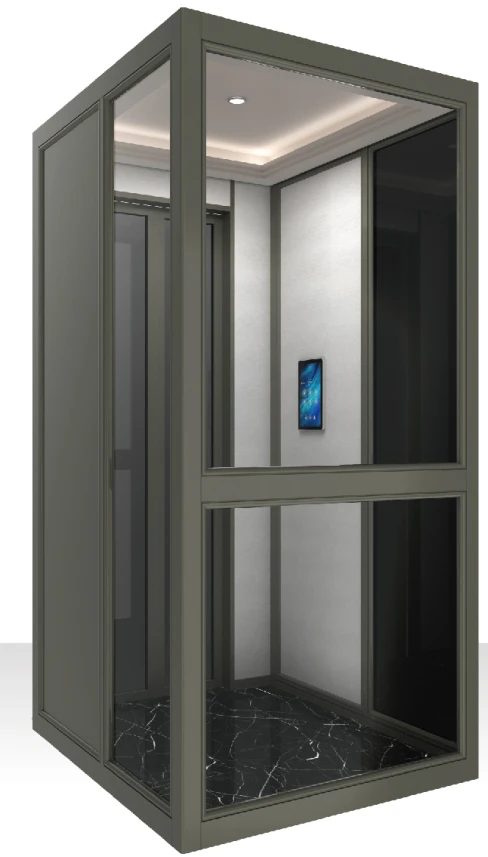
Villa Elevator: Villa elevators, like those found at Villa Elevator, are more suitable for larger, multi - story villas. They are designed to handle more stops compared to mini home elevators. With advanced technology and a more robust construction, villa elevators can usually serve up to 5 - 6 stops. These elevators often come with features such as smooth operation, quiet motors, and advanced safety systems, making them a popular choice for luxury homes.

-
Hydraulic Home Elevator: Hydraulic home elevators, detailed at Hydraulic Home Elevator, use hydraulic fluid to move the elevator car. They are known for their reliability and ability to handle heavier loads. However, their speed and the number of stops can be limited by the hydraulic system. Generally, hydraulic home elevators can serve up to 6 - 8 stops. The hydraulic cylinders need to be long enough to accommodate the vertical travel, and the pumping system needs to be powerful enough to lift the car to the desired height.
Safety Regulations
Safety is of utmost importance in elevator design and installation. Local and international safety regulations govern the operation of home elevators. These regulations ensure that the elevator is safe for passengers at all times. As the number of stops increases, the complexity of the safety systems also increases.
For example, elevators with more stops need more sophisticated door interlock systems to prevent the doors from opening when the car is not at the correct floor. They also require advanced braking systems to ensure a safe stop in case of an emergency. Meeting these safety requirements can sometimes limit the maximum number of stops, as additional safety features may add to the cost and complexity of the elevator.
Case Studies
Case 1: A Small Two - Story Cottage
We recently installed a mini home elevator in a small two - story cottage. The client wanted a convenient way to move between the ground floor and the upper floor. Given the limited space and the relatively light usage, a mini home elevator was the perfect choice. With its compact design, it easily fit into the available space, and it was able to serve the two stops efficiently. The installation was quick and hassle - free, and the client was very satisfied with the result.
Case 2: A Five - Story Villa
In a large five - story villa, we installed a villa elevator. The client had a large family and wanted an elevator that could provide smooth and comfortable transportation between all the floors. The elevator was equipped with advanced safety features and a high - performance motor. It was able to handle the five stops without any issues, and the quiet operation made it a great addition to the luxurious home.
Case 3: An Eight - Story Apartment Building
For an eight - story apartment building, a hydraulic home elevator was installed. The building had a strong structure that could support the weight of the elevator and its passengers. The hydraulic system was designed to provide reliable operation for the eight stops. Although the installation was more complex compared to the previous cases, with proper planning and engineering, the elevator was successfully installed and has been operating smoothly ever since.
Determining the Right Number of Stops for Your Home
When deciding on the number of stops for your glass home elevator, you need to consider your specific needs and the characteristics of your home.
-
Usage: Think about how often the elevator will be used and by how many people. If it's just for occasional use by a small family, a mini home elevator with a fewer number of stops may be sufficient. However, if you have a large family or often entertain guests, a villa elevator or a hydraulic home elevator with more stops may be a better choice.
-
Future Expansion: Consider the possibility of future expansion. If you plan to add more floors to your home in the future, it may be worth investing in an elevator that can accommodate a higher number of stops.
-
Budget: The cost of the elevator increases with the number of stops. You need to balance your desire for more stops with your budget. Sometimes, a compromise may be necessary to ensure that you get an elevator that meets your needs without breaking the bank.
Conclusion
In conclusion, the maximum number of stops a glass home elevator can have depends on several factors, including the structure of the building, the type of elevator, and safety regulations. While mini home elevators are typically limited to 2 - 3 stops, villa elevators can serve up to 5 - 6 stops, and hydraulic home elevators can handle up to 6 - 8 stops.
If you are considering installing a glass home elevator in your home, we are here to help. Our team of experts can assess your needs, evaluate your home's structure, and recommend the best elevator solution for you. Whether you need a simple two - stop elevator or a more complex multi - stop system, we have the experience and expertise to provide a high - quality and reliable elevator. Contact us today to start the conversation about your home elevator project.
References
- International Elevator Safety Code Handbook
- Elevator Design and Installation Guidelines by industry associations