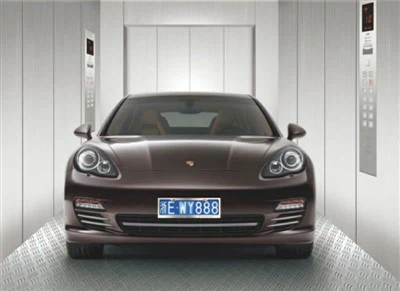
Are there any height limitations for car elevators? This is a question that many clients often ask when considering purchasing car elevators. As a professional car elevator supplier, I'd like to delve into this topic in detail to provide you with comprehensive information.
Understanding the Basics of Car Elevators
Before discussing height limitations, it's essential to understand what car elevators are and their common applications. Car elevators are specialized lifting devices designed to transport vehicles between different levels. They are widely used in various settings, such as multi - story parking garages, commercial buildings with underground car parks, and even in some high - end residential complexes.
There are different types of car elevators, including Car Elevator Commercial and Car Freight Elevator. The former is typically used in commercial environments to efficiently move cars within a building, providing convenient parking solutions. The latter, on the other hand, is more suitable for transporting not only cars but also other heavy - duty items related to the automotive industry, like car parts or small vehicles during production and logistics processes.
Factors Affecting Height Limitations
Structural Design
One of the primary factors influencing the height limitations of car elevators is the structural design. The elevator shaft must be able to support the weight of the elevator car, the vehicle inside it, and the counterweights. As the height increases, the forces exerted on the shaft and the supporting structure become more significant. Engineers need to carefully design the shaft's materials and construction method to ensure its stability. For example, taller shafts may require reinforced concrete or steel structures to withstand the increased loads.
Hoisting Mechanisms
The hoisting mechanism is another crucial aspect. Different types of hoisting systems, such as traction and hydraulic systems, have different capabilities. Traction elevators use steel ropes and a motor - driven pulley to lift and lower the elevator car. They are generally more suitable for high - rise applications because they can handle greater heights and speeds. Hydraulic elevators, on the other hand, use a piston and hydraulic fluid to move the car. Hydraulic systems are more commonly used for lower - rise applications, typically up to around 6 - 7 floors (approximately 20 - 25 meters). This is because as the height increases, the length of the piston becomes longer, which can lead to issues such as increased fluid pressure requirements and potential leakage problems.
Safety Systems
Safety is of utmost importance in elevator design. As the height of the elevator increases, the safety systems need to be more sophisticated. Height - related safety features include overspeed governors, which are designed to prevent the elevator from falling at an excessive speed, and emergency brakes. For taller elevators, the response time and reliability of these safety systems become even more critical. Moreover, in case of a power outage, taller elevators need more advanced emergency power supply and backup systems to ensure the safety of the passengers (or the vehicle being transported).
Typical Height Ranges for Different Types of Car Elevators
Low - Rise Car Elevators
Low - rise car elevators, often hydraulic models, are suitable for applications where the vertical distance is relatively short. These are commonly found in small - scale commercial buildings or residential properties with limited floors. They typically have a height range of up to 20 - 25 meters. The advantage of low - rise car elevators is their relatively simple installation and maintenance. However, their limited height capacity makes them unsuitable for large multi - story parking complexes.
High - Rise Car Elevators
High - rise car elevators, usually traction - based, can reach much greater heights. In large commercial parking garages or high - end buildings, they can serve buildings with 10 floors or more, sometimes reaching heights of over 50 meters. These elevators are equipped with advanced control systems and high - performance components to ensure smooth and efficient operation at high altitudes.
Overcoming Height Limitations
Despite the challenges associated with height limitations, technological advancements have made it possible to overcome many of these barriers.
Advanced Materials
The use of advanced materials in elevator construction has significantly improved the performance of car elevators at greater heights. For example, high - strength steel and carbon fiber composites are now being used in the construction of elevator ropes and structural components. These materials are lighter and stronger than traditional materials, reducing the overall weight of the elevator system and allowing for more efficient operation at higher heights.
Intelligent Control Systems
Intelligent control systems play a vital role in optimizing the operation of high - rise car elevators. These systems can adjust the elevator's speed, acceleration, and deceleration based on factors such as the load inside the car and the height of the journey. They also enable better traffic management in multi - elevator installations, ensuring that cars are transported quickly and efficiently between different levels.
Considerations for Clients
When clients are considering purchasing a car elevator, they need to take several factors into account regarding height limitations.


Building Requirements
First, they should assess the height requirements of their building. If it's a small - scale project, a low - rise hydraulic elevator may be sufficient. However, for large commercial buildings or high - end residential complexes, a high - rise traction elevator is likely to be a better choice.
Budget
The cost of a car elevator is also affected by its height capacity. High - rise elevators with advanced features and materials are generally more expensive than low - rise ones. Clients need to balance their budget with their height requirements to make an appropriate decision.
Contact Us for Your Car Elevator Needs
If you are in the process of planning a project that requires a car elevator and have questions about height limitations or other aspects of car elevators, we are here to help. As a leading car elevator supplier, we have extensive experience in designing, manufacturing, and installing car elevators for various applications. Our team of experts can provide you with customized solutions based on your specific requirements.
Whether you need a Car Elevator Commercial for your business or a Car Freight Elevator for your industrial needs, we can offer you high - quality products and professional services. Contact us today to start discussing your car elevator project and find the perfect solution for you.
References
- "Elevator Technology Handbook" by John J. Bachmann
- "Design and Construction of Elevators and Escalators" by the Elevator World, Inc.
- Industry reports from leading elevator manufacturers and research institutions.