As a supplier of MRL (Machine Room - Less) Freight Elevators, I often receive inquiries from non - professional installers about the ease of installing our products. In this blog, I'll delve into this topic in detail, exploring the various aspects that determine whether MRL Freight Elevators are easy to install for those without professional installation backgrounds.
Understanding MRL Freight Elevators
Before discussing the installation process, it's essential to understand what MRL Freight Elevators are. MRL Freight Elevators are designed without a separate machine room, which is a significant advantage in terms of space utilization. Compared to traditional Machine Room Cargo Elevator, MRL Freight Elevators have a more compact design, with the driving equipment usually installed in the hoistway. This not only saves building space but also simplifies the overall structure to some extent.
Components of MRL Freight Elevators
MRL Freight Elevators consist of several key components, including the car, counterweight, guide rails, traction machine, control system, and safety devices. Each component plays a crucial role in the proper functioning of the elevator. For non - professional installers, understanding these components and their interrelationships is the first step in the installation process.
The car is the part that transports goods. It needs to be installed precisely on the guide rails to ensure smooth movement. The counterweight is used to balance the weight of the car and the load, reducing the energy consumption of the elevator. The guide rails provide a path for the car and counterweight to move up and down, and they must be installed vertically and firmly.
The traction machine is the power source of the elevator, responsible for driving the car and counterweight. The control system manages the operation of the elevator, including starting, stopping, and floor selection. Safety devices, such as overspeed governors and safety gears, are essential for protecting the elevator and its users from potential accidents.
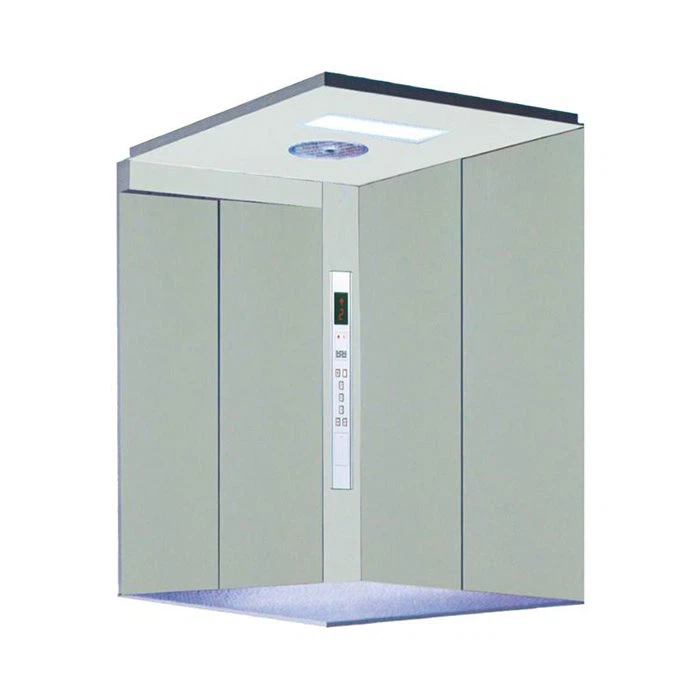

Ease of Installation for Non - Professional Installers
Simplified Structure
One of the main advantages of MRL Freight Elevators is their simplified structure compared to traditional elevators. Without a separate machine room, there is no need to install and wire complex equipment in a dedicated space. This reduces the overall installation time and complexity. Non - professional installers may find it easier to handle the installation process because they don't have to deal with the additional challenges of a machine room installation.
For example, in a traditional MR Freight Elevator with a machine room, installers need to ensure proper ventilation, temperature control, and access for maintenance in the machine room. In contrast, MRL Freight Elevators eliminate these requirements, allowing non - professional installers to focus more on the core installation tasks in the hoistway.
Pre - assembled Components
Many MRL Freight Elevators come with pre - assembled components. Our company, as a supplier, takes great care in pre - assembling various parts of the elevator in the factory. This means that non - professional installers only need to connect these pre - assembled components on - site, rather than having to assemble each part from scratch.
For instance, the traction machine and control system are often pre - wired and calibrated in the factory. This reduces the risk of wiring errors and ensures that the elevator's electrical system functions correctly. Non - professional installers can follow the provided installation instructions to connect these components, which are usually straightforward and easy to understand.
Comprehensive Installation Manuals
We provide comprehensive installation manuals for our MRL Freight Elevators. These manuals include detailed step - by - step instructions, diagrams, and safety guidelines. Non - professional installers can refer to these manuals throughout the installation process. The manuals cover everything from site preparation to the final commissioning of the elevator.
The installation manuals also include troubleshooting guides, which can be very helpful for non - professional installers. If they encounter any problems during the installation, they can refer to the troubleshooting section to find solutions quickly.
Challenges for Non - Professional Installers
Technical Knowledge Requirements
Despite the simplified structure and pre - assembled components, installing an MRL Freight Elevator still requires a certain level of technical knowledge. Non - professional installers need to understand basic electrical and mechanical principles. For example, they need to know how to connect electrical wires correctly to avoid short - circuits and ensure the safe operation of the elevator.
They also need to have a good understanding of the load - bearing capacity of the building structure. Incorrect installation of the elevator can put excessive stress on the building, leading to potential safety hazards. Therefore, non - professional installers may need to consult with a professional engineer or architect to ensure that the installation site can support the elevator.
Safety Regulations
Elevator installation is subject to strict safety regulations. Non - professional installers may not be fully aware of all these regulations. For example, there are regulations regarding the installation height of safety devices, the strength of the guide rails, and the ventilation requirements in the hoistway. Failure to comply with these regulations can result in safety risks and legal issues.
To address this challenge, our company provides training materials on safety regulations as part of the installation package. We also recommend that non - professional installers consult with local regulatory authorities to ensure that their installation meets all the necessary requirements.
Tips for Non - Professional Installers
Plan Ahead
Before starting the installation, non - professional installers should carefully plan the entire process. This includes reviewing the installation site, checking the dimensions of the elevator components, and creating a detailed installation schedule. Planning ahead can help avoid potential problems and ensure that the installation proceeds smoothly.
Seek Professional Help
If non - professional installers encounter any difficulties during the installation process, they should not hesitate to seek professional help. They can contact our technical support team, who are available to provide guidance and assistance. Additionally, they can consult with local elevator installation companies or engineers for advice.
Follow Safety Procedures
Safety should always be the top priority during the installation process. Non - professional installers should wear appropriate safety gear, such as hard hats and safety shoes. They should also follow all the safety guidelines provided in the installation manual. For example, when working in the hoistway, they should use proper fall - protection equipment.
Conclusion
In conclusion, MRL Freight Elevators have some features that make them relatively easy to install for non - professional installers, such as their simplified structure, pre - assembled components, and comprehensive installation manuals. However, there are also challenges, including the need for technical knowledge and compliance with safety regulations.
If you are a non - professional installer interested in installing our MRL Freight Elevators, we are here to support you every step of the way. Our products are designed to be user - friendly, and our technical support team can provide you with the necessary guidance and assistance. If you are considering purchasing an MRL Freight Elevator for your project, we encourage you to contact us for more information and to discuss your specific requirements. We look forward to the opportunity to work with you and provide you with high - quality elevator solutions.
References
- Elevator Installation Standards and Guidelines, National Elevator Industry
- Technical Manuals of MRL Freight Elevators, [Our Company's Documentation]