Measuring the space for a villa elevator installation is a crucial step that requires precision and careful consideration. As a villa elevator supplier, I've encountered various scenarios where improper space measurement led to complications during the installation process. In this blog, I'll share my insights on how to accurately measure the space for a villa elevator, ensuring a seamless installation and optimal performance.
Understanding the Basics of Villa Elevator Space Requirements
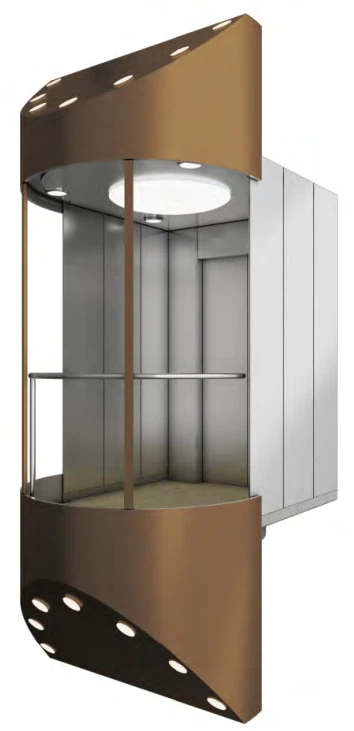
Before diving into the measurement process, it's essential to understand the basic space requirements for a villa elevator. Different types of elevators, such as Glass Home Elevator and Indoor Residential Elevators, have varying space needs based on their design, capacity, and functionality.
The key components that need to be considered when measuring the space include the elevator shaft, the machine room (if required), the landing areas on each floor, and the clearances around the elevator for maintenance and safety purposes.
Step 1: Determine the Elevator Type and Capacity
The first step in measuring the space is to determine the type of elevator that best suits the villa's needs. Factors such as the number of floors, the expected traffic, and the available budget will influence this decision. For instance, a Villa Elevator with a higher capacity will require more space in the shaft and at the landings.
Once the elevator type is selected, the next step is to determine the capacity. This is typically measured in terms of the number of passengers or the weight the elevator can carry. A larger capacity elevator will naturally need more space to accommodate the passengers and the machinery.
Step 2: Measure the Elevator Shaft
The elevator shaft is the vertical space where the elevator car moves. Measuring the shaft accurately is crucial as it determines the size of the elevator car and the overall functionality of the elevator.
- Length and Width: Use a tape measure to measure the length and width of the shaft at the bottom, middle, and top. It's important to measure at multiple points to account for any irregularities in the shaft walls. The minimum clear dimensions of the shaft should be sufficient to accommodate the elevator car, the guide rails, and the safety equipment.
- Height: Measure the height of the shaft from the bottom pit to the top of the overhead space. The pit is the space below the lowest landing where the elevator car can come to rest in case of an emergency. The overhead space is the area above the highest landing that allows the elevator car to stop safely.
Step 3: Consider the Machine Room
Not all villa elevators require a separate machine room. Some modern elevators have a machine that can be installed within the shaft or on the top of the elevator car. However, if a machine room is required, it's important to measure the space for it as well.
- Location: The machine room should be located in a convenient and accessible area near the elevator shaft. It should also be well-ventilated and protected from moisture and extreme temperatures.
- Dimensions: Measure the length, width, and height of the machine room. The machine room should be large enough to accommodate the elevator machinery, control panels, and any other equipment. There should also be enough space for maintenance personnel to move around safely.
Step 4: Measure the Landing Areas
The landing areas are the spaces on each floor where the elevator doors open. These areas need to be large enough to allow passengers to enter and exit the elevator safely.
- Depth and Width: Measure the depth and width of the landing area at each floor. The depth should be sufficient to allow passengers to stand comfortably while waiting for the elevator. The width should be wide enough to accommodate the opening of the elevator doors and the movement of passengers.
- Clearance: Ensure that there is a clear path from the landing area to the elevator doors. There should be no obstacles such as furniture, walls, or columns that could obstruct the movement of passengers.
Step 5: Account for Clearances
In addition to the main spaces, it's important to account for the clearances around the elevator for maintenance and safety purposes.
- Side Clearances: Measure the clearances on the sides of the elevator car and the shaft walls. These clearances are necessary to prevent the elevator car from rubbing against the walls and to allow for the installation of safety devices such as buffers and guide shoes.
- Top and Bottom Clearances: Measure the clearances at the top and bottom of the elevator car. The top clearance is required to prevent the elevator car from hitting the ceiling in case of overtravel. The bottom clearance is necessary to allow the elevator car to stop safely in the pit.
Step 6: Document and Verify the Measurements
Once all the measurements are taken, it's important to document them accurately. Create a detailed floor plan that shows the dimensions of the elevator shaft, the machine room, the landing areas, and the clearances. Include any notes or observations about the space, such as the presence of any obstacles or irregularities.
It's also a good idea to verify the measurements with a professional engineer or architect. They can review the measurements and provide valuable insights to ensure that the space is suitable for the elevator installation.

Conclusion
Measuring the space for a villa elevator installation is a complex but essential process. By following these steps and considering all the factors involved, you can ensure that the elevator fits perfectly into the available space and provides a safe and comfortable ride for the passengers.
If you're in the process of planning a villa elevator installation and need further assistance with space measurement or elevator selection, don't hesitate to contact us. Our team of experts is ready to help you make the right decisions and ensure a successful installation.
References
- "Elevator Design and Installation Handbook"
- "Residential Elevator Standards and Guidelines"