When it comes to freight elevators, one of the most critical considerations for building owners, architects, and facility managers is the amount of space required. As a supplier of MRL (Machine Room-Less) Freight Elevators, I understand the importance of this factor and am here to provide in-depth insights into the space requirements of MRL Freight Elevators.
Understanding MRL Freight Elevators
Before delving into the space requirements, let's briefly understand what MRL Freight Elevators are. MRL Freight Elevators are a modern solution for transporting goods within a building. Unlike traditional Machine Room Cargo Elevator, which require a separate machine room to house the elevator's control systems and machinery, MRL Freight Elevators integrate these components directly into the elevator shaft or hoistway. This innovative design eliminates the need for a dedicated machine room, offering significant space savings and flexibility in building design.
Space Requirements in the Hoistway
The hoistway is the vertical shaft through which the elevator car travels. The space required in the hoistway for an MRL Freight Elevator depends on several factors, including the size of the elevator car, the load capacity, and the speed of the elevator.
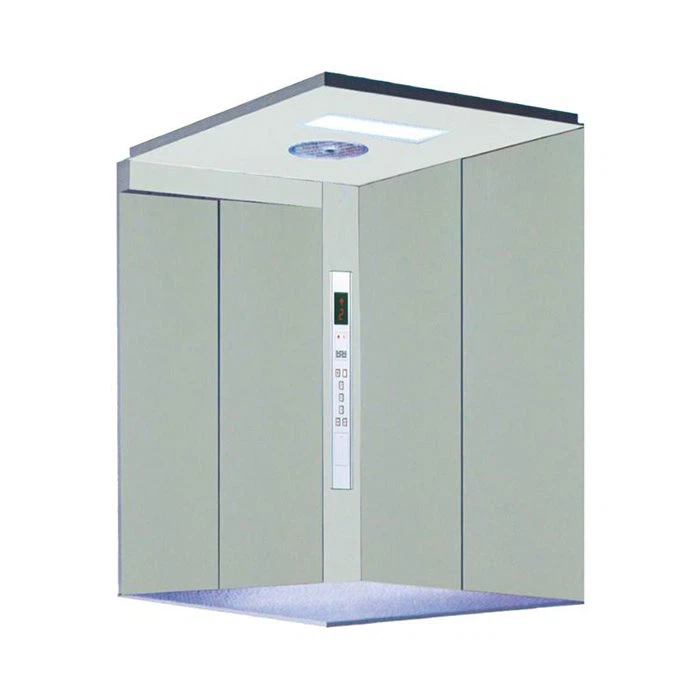

- Elevator Car Size: The dimensions of the elevator car are a primary determinant of the hoistway size. Larger cars require more space in the hoistway to accommodate their movement. When selecting an MRL Freight Elevator, it's essential to consider the size of the goods that will be transported. For example, if you need to transport large pallets or equipment, you'll need a larger car size, which will increase the hoistway space requirements.
- Load Capacity: The load capacity of the elevator also affects the hoistway space. Elevators with higher load capacities typically require stronger structural components and more robust machinery, which may take up additional space in the hoistway. It's crucial to accurately estimate the maximum load that the elevator will need to carry to ensure that the hoistway is sized appropriately.
- Elevator Speed: Faster elevators may require more space in the hoistway to allow for smooth acceleration and deceleration. This is because higher speeds generate more kinetic energy, and the elevator needs sufficient space to safely manage this energy. When considering the speed of the MRL Freight Elevator, it's important to balance the need for efficiency with the available hoistway space.
Space Requirements at the Landing
In addition to the hoistway space, MRL Freight Elevators also require space at the landings, which are the areas where passengers or goods enter and exit the elevator. The landing space requirements depend on factors such as the door width, the type of door operation, and the traffic flow at the landing.
- Door Width: The width of the elevator doors is a critical factor in determining the landing space. Wider doors allow for easier loading and unloading of goods but require more space at the landing. It's important to choose a door width that is appropriate for the size of the goods being transported and the available landing space.
- Door Operation: The type of door operation, such as sliding doors or swing doors, can also affect the landing space requirements. Sliding doors typically require less space at the landing compared to swing doors, as they do not swing out into the landing area. When selecting the door operation type, it's important to consider the traffic flow and the available space at the landing.
- Traffic Flow: The volume of traffic at the landing, including the number of people and goods entering and exiting the elevator, also influences the landing space requirements. High-traffic areas may require larger landing areas to ensure safe and efficient movement. It's important to analyze the expected traffic flow at the landing to determine the appropriate landing space.
Advantages of MRL Freight Elevators in Terms of Space
One of the significant advantages of MRL Freight Elevators is their space-saving design. By eliminating the need for a dedicated machine room, MRL Freight Elevators free up valuable floor space in the building. This space can be used for other purposes, such as additional storage, office space, or retail space, increasing the overall functionality and value of the building.
- Flexibility in Building Design: The absence of a machine room also provides greater flexibility in building design. Architects and designers can have more freedom in planning the layout of the building, as they are not restricted by the need to allocate space for a machine room. This can result in more efficient and aesthetically pleasing building designs.
- Cost Savings: In addition to the space savings, MRL Freight Elevators can also lead to cost savings. The elimination of the machine room reduces the construction costs associated with building and maintaining the machine room. Additionally, the reduced space requirements may result in lower energy consumption, further reducing operating costs.
Comparing MRL Freight Elevators with Other Types of Freight Elevators
To better understand the space requirements of MRL Freight Elevators, it's useful to compare them with other types of freight elevators, such as SMR Freight Elevator and Machine Room Cargo Elevators.
- SMR Freight Elevators: SMR (Small Machine Room) Freight Elevators require a smaller machine room compared to traditional Machine Room Cargo Elevators. However, they still need some space for the machine room, which is more than what is required for MRL Freight Elevators. MRL Freight Elevators offer even greater space savings by eliminating the need for a machine room altogether.
- Machine Room Cargo Elevators: Traditional Machine Room Cargo Elevators require a dedicated machine room to house the elevator's control systems and machinery. This machine room can take up a significant amount of floor space in the building, especially in high-rise buildings. MRL Freight Elevators provide a more space-efficient alternative by integrating the machinery into the hoistway.
Considerations for Space Planning
When planning the space for an MRL Freight Elevator, it's important to work closely with a professional elevator supplier, such as our company. Our team of experts can provide detailed information on the space requirements based on your specific needs and building conditions.
- Site Survey: A thorough site survey is essential to accurately assess the available space and identify any potential challenges or limitations. Our team will conduct a detailed survey of the building, including the hoistway, landings, and surrounding areas, to determine the optimal location and size for the MRL Freight Elevator.
- Customization: We understand that every building is unique, and our MRL Freight Elevators can be customized to meet your specific space requirements. Whether you have limited space or specific design constraints, our team can work with you to develop a solution that fits your needs.
- Future Expansion: It's also important to consider future expansion when planning the space for an MRL Freight Elevator. If there is a possibility of increasing the load capacity or adding additional floors in the future, it's advisable to plan for some extra space in the hoistway and at the landings.
Conclusion
In conclusion, the space requirements of an MRL Freight Elevator depend on various factors, including the elevator car size, load capacity, speed, door width, and traffic flow. As a leading supplier of MRL Freight Elevator, we offer innovative solutions that provide significant space savings and flexibility in building design. Our MRL Freight Elevators eliminate the need for a dedicated machine room, freeing up valuable floor space and reducing construction and operating costs.
If you are considering installing an MRL Freight Elevator in your building, we invite you to contact us for a consultation. Our team of experts will work with you to understand your specific needs and provide a customized solution that meets your space requirements and budget. Let's work together to enhance the efficiency and functionality of your building with our high-quality MRL Freight Elevators.
References
- Elevator Design Handbook, Third Edition, by Peter S. Ching and Steven A. Jacobs
- The Elevator and Escalator Handbook, Fourth Edition, by John F. Jendrzejczyk